Skip to content
Introduction:
Service desk IT jobs in the USA offer one of the fastest entry points into the tech industry, even for beginners with no prior experience. With over 500,000 openings and strong demand across companies, these roles offer stable income, career growth, and opportunities to transition into high-paying IT fields such as cybersecurity and cloud computing.
| Detail | Information |
| Education Required | High school diploma / GED |
| Experience Needed | None for entry-level |
| Median Annual Salary | $57,910 |
| Top Hiring States | California, Texas, New York |
| Official Apply Link | https://www.usajobs.gov/ |
What Does a Service Desk IT Job Do in the USA?

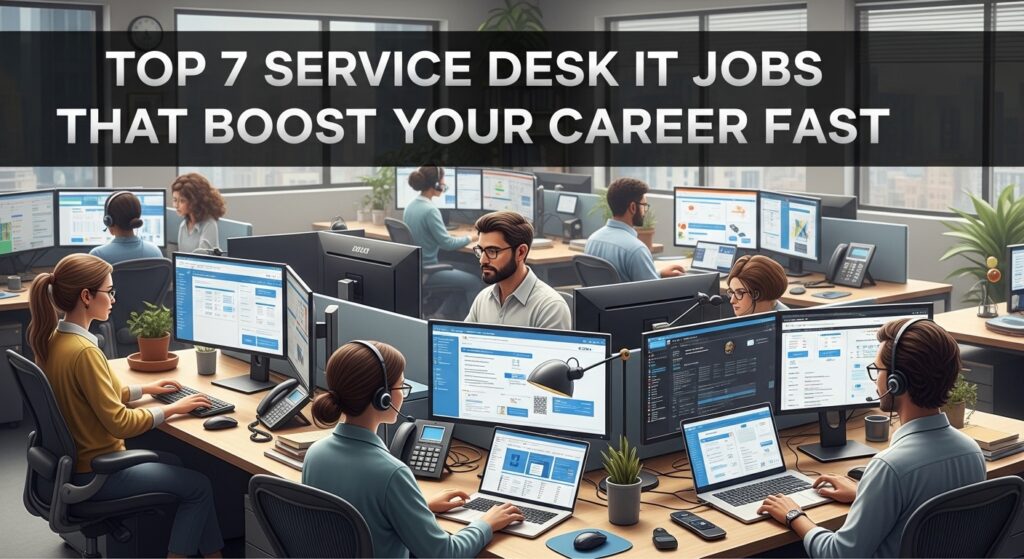
Service desk IT jobs involve providing technical support to end users, troubleshooting software and hardware issues, and maintaining operational efficiency across businesses and government agencies. You act as the first line of support, ensuring technical problems are resolved quickly and professionally.
Daily tasks include resolving system errors, updating and installing software, configuring devices, and escalating complex issues to higher-level IT staff. You work in offices, call centers, or remotely, using ticketing systems such as ServiceNow or Jira; remote desktop software; and internal knowledge bases.
Service desk professionals collaborate with network administrators, systems analysts, and other IT teams to maintain smooth operations. Communication skills are critical, as you must explain technical solutions in simple terms to non-technical users. This experience also prepares you for future IT roles like system administration, network engineering, or cybersecurity.
Key Skills That Help You Succeed in Service Desk IT Jobs

To grow quickly in service desk IT roles, you need a balanced combination of technical knowledge and practical communication skills that enable you to resolve issues efficiently while keeping users informed and comfortable. In most roles, you are the first point of contact, which means your ability to listen carefully, understand the problem, and respond clearly plays a major role in how effectively issues are resolved.
Technical skills include a solid understanding of operating systems such as Windows, macOS, and Linux, as well as hands-on familiarity with common workplace tools. You should be comfortable working with ticketing systems, remote desktop applications, and basic networking concepts like IP addressing, connectivity issues, and device configuration. Day-to-day tasks often involve diagnosing hardware faults, fixing software errors, installing updates, and ensuring systems run smoothly without interruptions. Knowing how to follow standard troubleshooting steps and document solutions properly is also important, as it helps both you and your team handle similar issues faster in the future.
Equally important are soft skills that shape how you interact with users. Strong communication allows you to explain technical problems in a way that non-technical users can understand without confusion. Patience is essential, especially when dealing with frustrated users or repeated issues. Problem-solving skills help you stay calm under pressure and think through different solutions instead of relying on guesswork. Time management also becomes important as you may be handling multiple requests at once, each with different levels of urgency.
Employers also look for individuals who are dependable and willing to improve their skills over time. Technology changes regularly, so being open to learning new systems, tools, and processes makes a noticeable difference in your performance. Those who take the initiative to understand systems more deeply, assist team members, and handle tasks responsibly often stand out and move forward more quickly in their careers.
Top 7 Service Desk IT Jobs and What You Do in Each

Understanding the variety of service desk IT roles helps match your skills to the right career path. Below are seven common positions, their responsibilities, qualifications, and advancement opportunities.
1. IT Help Desk Technician
IT help desk technicians handle day-to-day support requests from end users. You respond to calls, emails, and chat messages to troubleshoot software errors, reset passwords, and configure hardware. Tools include ticketing software, remote access applications, and diagnostic utilities.
Entry-level positions typically require a high school diploma or GED. CompTIA A+ or Microsoft certifications improve hiring chances. Work hours are typically 8–10 hours per day in office environments. Career advancement can lead to a desktop support specialist or IT support analyst position.
2. Desktop Support Specialist
Desktop support specialists focus on resolving hardware and software issues for computers and peripherals, both on-site and remotely. You install, configure, and troubleshoot systems while maintaining documentation and guiding users on best practices.
Qualifications include basic networking knowledge and familiarity with Windows, macOS, or Linux. Microsoft Certified: The Modern Desktop Administrator Associate certification is highly recommended. Median salaries exceed $60,000, particularly in states like California and New York. Advancement opportunities include systems administration and IT project management roles.
3. Technical Support Analyst
Technical support analysts provide advanced support for network services, software applications, and specialized IT systems. You analyze recurring problems, train users, and offer workflow improvement suggestions.
Certifications in ITIL, CompTIA Network+, or vendor-specific tools are valuable. You typically work at medium- to large-sized companies, interacting with multiple teams. This role is a bridge toward systems administrator or network engineering careers, offering exposure to monitoring systems, reporting tools, and service-level management.
4. Service Desk Analyst
Service desk analysts categorize incidents, manage service requests, and escalate unresolved issues according to priority. You monitor service level agreements (SLAs) and maintain internal documentation to ensure efficiency.
Daily tools include Zendesk, Remedy, and Freshservice. Entry-level applicants should possess basic IT knowledge, while certifications such as ITIL Foundation or CompTIA A+ are advantageous. Salaries range from $50,000 to $70,000, and experienced analysts often transition into IT operations, project coordination, or network support.
5. IT Support Specialist
IT support specialists maintain workstations, configure laptops, install software, and manage mobile devices. You may also handle system backups, antivirus updates, and network connectivity support.
Ideal candidates hold an associate degree or relevant certifications. Work environments include corporate offices, universities, and government agencies. With 2–5 years of experience, you can progress to a role as an IT administrator, network engineer, or technical project coordinator.
6. Desktop Support Technician
Desktop support technicians handle hardware installation and repair, troubleshoot computer systems, and assist with employee onboarding. You perform preventive maintenance, monitor system performance, and provide direct user assistance.
Recommended certifications include CompTIA A+ and Microsoft Modern Desktop Administrator. Salaries range from $55,000 to $65,000, higher in states like California, Texas, and New York. Career progression often leads to IT operations or systems administration roles.
7. End User Support Technician
End-user support technicians assist employees directly, solving software problems, connectivity issues, and hardware errors. You train users, provide guidance on system usage, and escalate complex problems.
Entry-level roles typically require high school completion, while certifications enhance employability. Over time, experienced professionals can move into technical analyst or IT project coordinator roles, overseeing multiple IT services.
Requirements to Get Service Desk IT Jobs in the USA

Most service desk IT jobs require at least a high school diploma or GED, making them accessible to a wide range of applicants, including beginners and career changers. While a formal degree is not always necessary, having additional qualifications such as an associate degree in information technology or a related field can improve your chances of getting hired and help you stand out among other candidates.
Employers generally look for individuals who can think logically, communicate clearly, and handle basic technical tasks with confidence. You should be comfortable using computers, familiar with common software applications, and able to follow step-by-step processes to resolve issues. Problem-solving ability is especially important, as you will often need to identify the cause of technical problems and fix them quickly without supervision.
Certifications can play a major role in strengthening your application. Credentials such as CompTIA A+, ITIL Foundation, or Microsoft Modern Desktop Administrator show that you have practical knowledge and are serious about working in IT support. Even for entry-level service desk IT jobs, having at least one certification can increase your chances of getting interviews. While many entry-level roles do not require prior experience, some employers may prefer candidates who have spent one to three years in related IT support positions or internships.
The work itself is not physically demanding, as most tasks are performed in office environments or through remote systems. You will typically spend your time working on a computer, responding to support requests, and assisting users through calls, chats, or emails. Flexibility in work hours may also be required, especially in companies that provide around-the-clock support.
For non-U.S. applicants, having valid work authorization is essential before applying. This may include visas such as H-2B for temporary roles or H-1B for more specialized positions, as well as an employment authorization document. Not all employers offer visa sponsorship, so it is important to carefully review each job listing and confirm eligibility requirements before submitting your application.
Career Growth Path in Service Desk IT Jobs

One of the biggest advantages of service desk IT jobs is the clear and structured career progression they offer in the IT industry.
Most professionals start in entry-level roles such as help desk technicians or support specialists. After gaining 1–2 years of experience, you can move into mid-level roles like technical support analyst or system administrator.
With additional certifications and hands-on experience, career growth can lead to advanced roles such as network engineer, cybersecurity analyst, or IT manager. These positions offer significantly higher salaries and greater responsibilities.
Continuous learning plays a major role in career advancement. Certifications such as CompTIA Network+, Security+, and Microsoft Azure can pave the way for entry into specialized IT fields. Many companies also offer internal training programs, making it easier to advance within the organization.
How Much Does a Service Desk IT Job Earn in the USA?

Service desk IT professionals earn a median annual salary of $57,910, approximately $27.84 per hour, according to the U.S. Bureau of Labor Statistics. Entry-level pay starts near $38,000, while senior or certified positions can reach $84,000 annually.
Top-paying states include California ($69,540), New York ($64,120), and Texas ($60,280). Employers often offer overtime or bonuses, adding to total compensation. Career growth and certifications typically increase earning potential significantly.
Service Desk IT Job Salary by State
| Location | Median Annual Salary |
| USA National Average | $57,910 |
| California | $69,540 |
| Texas | $60,280 |
| New York | $64,120 |
These figures are based on the latest available BLS data. Salaries may vary by employer, location, and experience. Use the official link at the end of this article to check the most current figures.
Best Places to Find Service Desk IT Work Across the USA

Top employers for service desk IT roles include Amazon, UPS, FedEx, Walmart, and federal agencies, as listed on USAJOBS.gov. Major states with openings include California, Texas, New York, Florida, and Illinois.
Official portals provide up-to-date listings. Companies often provide certification reimbursement and training, creating clear pathways for career advancement.
If you are also considering IT help desk technician roles, read our guide on Top IT Support Jobs in the USA on USAJobly.com.
How to Apply for Service Desk IT Positions Step by Step

Applying requires a structured approach: prepare your resume, collect documents, and submit applications on official platforms.
- Create a resume detailing your education, experience, and IT certifications.
- Collect identification and work authorization documents, plus copies of certificates.
- Apply on official company or government portals, following all instructions precisely.
Click the Apply Now button below to go directly to the official hiring page.
Final Thoughts:
Service desk IT jobs suit entry-level applicants, career changers, and international candidates with work authorization. These roles build strong technical skills, communication expertise, and IT problem-solving experience.
Employment growth for computer support specialists is projected at 9 percent through 2032. Demand remains robust in corporate, government, and remote settings.
Apply through multiple platforms, including Indeed, LinkedIn, company career pages, and USAJOBS (for federal roles only).
Frequently Asked Questions:
What skills do I need for service desk IT jobs?
You need communication, troubleshooting, and computer skills. Knowledge of operating systems, office software, and ticketing tools is highly beneficial.
Do I need a degree to work in a service desk IT role?
No degree is required for entry-level positions. Certifications such as CompTIA A+ or ITIL Foundation improve job prospects.
How much do service desk IT jobs pay in the USA?
Median pay is $57,910 annually, with top earners reaching $84,000 depending on experience, certifications, and state.
Where can I apply for service desk IT positions?
Apply directly on Amazon, UPS, FedEx, Walmart, or USAJOBS.gov for federal roles. Use official portals to ensure accurate application submission.
This article uses data from the U.S. Bureau of Labor Statistics and O*NET. Salary figures change over time. Visit the official BLS website to verify current data before making any career or financial decision.
[APPLY NOW BUTTON — Official Hiring Link: https://www.usajobs.gov/]
Reviewed by: USAJobly Editorial Team