Skip to content

What Are Electrician Jobs With No Experience?
Electrician jobs no experience are roles specifically designed for entry-level candidates who haven’t yet worked in the electrical trade. These electrician jobs no experience typically offer structured learning, safety training, and on-the-job experience under the supervision of a licensed professional.
If you’re wondering how to become an electrician without prior experience, the good news is: you don’t need a background in electrical systems to get started. What you do need is a strong work ethic, a willingness to learn, and access to the right training pathway.
Table of Contents
| Key Areas for Beginners | Description |
| Minimum Qualifications | High school diploma or GED is generally required, though not always mandatory. |
| First Step | Join a technical school or directly apply for an electrician apprenticeship. |
| Hands-on Learning | Learn through on-the-job experience with licensed electricians. |
| Certifications and Licensing | Varies by state; typically follows apprenticeship and exams. |
| Career Growth Opportunities | From entry-level electrician to master electrician, inspector, or business owner. |
How to Become an Electrician With No Experience
Electrician jobs no experience aren’t just possible—they’re a common starting point in this skilled trade. Starting your career through electrician jobs no experience roles gives beginners a structured roadmap to learn and grow.
Step 1: Meet the Basic Educational Requirements
Most employers and apprenticeship programs offering electrician jobs no experience require at least a high school diploma or GED. A strong foundation in math and physics can be helpful, especially for understanding electrical theory and wiring diagrams.
Step 2: Enroll in an Electrician Training Program
To prepare for electrician jobs no experience, training programs are offered by vocational schools, community colleges, and technical institutes. These programs teach:
- Electrical wiring and safety protocols
- Tools for electricians and blueprint reading
- Fundamentals of the National Electrical Code (NEC)
- Differences in residential vs commercial electrical systems
These are typically short-term and can be completed in 6–12 months, preparing you for entry-level roles or direct apprenticeships.
Step 3: Apply for an Electrician Apprenticeship
An electrician apprenticeship is where real learning begins. You work under the supervision of a licensed electrician and gain skills such as:
- Troubleshooting electrical systems
- Installing electrical panels
- Complying with OSHA and local code requirements
- Working on high-voltage and low-voltage systems
Apprenticeships can last between 1 to 5 years, depending on the state and the complexity of the training.
Step 4: Get Licensed or Certified (Varies by State)
Even for electrician jobs no experience, after completing your apprenticeship, most states require you to pass a licensing exam to become a licensed electrician. The exam typically covers:
- NEC compliance
- Electrical theory
- Safety protocols
- Local electrical codes
Once licensed, you can legally work on projects independently or supervise other electricians.
Electrician Career Path: From Entry-Level to Master
Many start their journey with no experience and progress through clearly defined stages:
| Career Stage | Description |
| Apprentice Electrician | Entry-level, works under supervision. |
| Journeyman Electrician | Fully qualified, licensed to work independently. |
| Master Electrician | Expert-level, can supervise teams or run a business. |
| Specialized Roles | Residential, Commercial, Industrial, or Renewable Energy Electrician. |
What Skills Are Needed to Succeed?
Essential Technical and Physical Skills
- Electrical Systems Knowledge: Understanding circuitry and voltage.
- Problem-Solving Skills: Diagnosing faults and solving technical issues.
- Manual Dexterity: Precision is critical when handling wiring and tools.
- Physical Stamina: Ability to work in tight spaces or on ladders for extended periods.
Safety Awareness and Compliance
Whether working on residential or industrial electrical systems, electricians must be fully aware of the hazards involved. Adherence to safety protocols and OSHA standards is non-negotiable.
Is Formal Education Necessary to Become an Electrician?
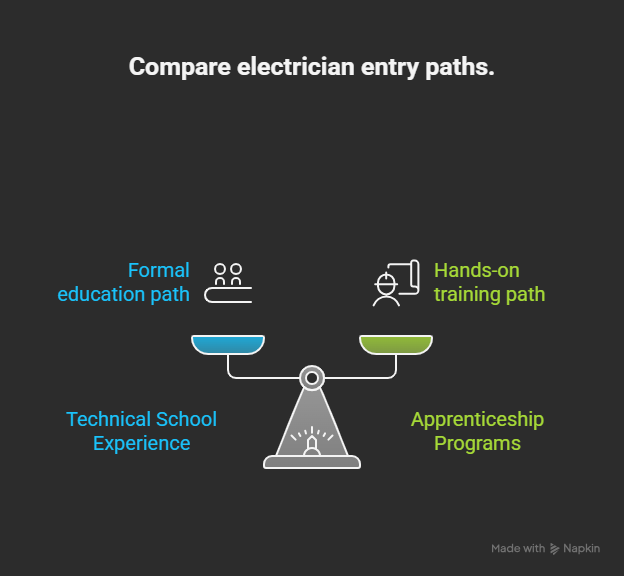
Not always. While some states and employers prefer applicants with technical school experience, many electricians begin directly through apprenticeship programs.
That said, enrolling in a formal program helps you:
- Gain structured technical training
- Understand NEC requirements
- Build a solid foundation in electrical theory
- Stand out to potential employers
Where to Find Electrician Training Programs?
You can find electrician training programs at:
- Community colleges
- Trade schools
- Vocational centers
- Online platforms (for theoretical knowledge only)
Some schools, such as Tulsa Welding School, offer both classroom and hands-on training with career services to assist job placement.
Electrician Job Outlook and Industry Trends
The U.S. Bureau of Labor Statistics projects steady job growth in the electrical trade. Several factors drive this demand:
- Aging infrastructure needing upgrades
- Growth in renewable energy systems
- Shortage of licensed electricians due to retirements
- Emphasis on electrical code compliance and safety
Specialization Options in the Electrical Trade
Electricians can diversify into various fields:
| Specialization | Focus Area |
| Residential Electrician | Homes and apartments |
| Commercial Electrician | Businesses and retail spaces |
| Industrial Electrician | Factories, plants, large machinery |
| Renewable Energy Tech | Solar panels, wind turbines, EV chargers |
Benefits of Becoming an Electrician
Choosing this trade offers multiple long-term benefits:
- Job Stability: High demand across industries
- Scalable Income: Licensing and experience increase your earning potential
- Independence: Start your own contracting business
- Career Versatility: Switch between residential, commercial, and industrial sectors
- Hands-On Satisfaction: Daily variety and problem-solving opportunities
What Tools Does an Entry-Level Electrician Need?
Starting electricians should invest in a basic toolkit:
- Voltage tester
- Wire stripper
- Pliers and cutters
- Screwdrivers
- Safety gloves and goggles
- Multimeter
- Conduit bender (for advanced tasks)
Over time, you can build your toolset based on specialization and job scope.
Licensing and Certification Requirements by State
Each U.S. state has its own requirements. Some general steps include:
- Completing an approved apprenticeship
- Passing the electrical licensing exam
- Renewing licenses regularly with continuing education units (CEUs)
Be sure to check with your state’s electrical board for specific regulations.
Final Thoughts:
Starting your career in electrician jobs with no experience may seem daunting—but with the right training, apprenticeship, and commitment, it’s a practical and rewarding journey.
There’s no shortcut, but every hour of training brings you closer to:
- Gaining your electrical license
- Becoming a skilled tradesperson
- Building a secure and flexible career
Whether you’re just finishing school or switching careers, now is the time to explore training programs and apprenticeship opportunities near you. The trade welcomes those who are serious, disciplined, and ready to learn.
Frequently Asked Questions
What’s the fastest way to become an electrician?
Trade school + apprenticeship combo is the most efficient. Some programs, like those at Tulsa Welding School, prepare students in as little as 7 months for entry-level roles.
Can women become electricians?
Absolutely. The industry encourages diversity, and opportunities exist for all skilled candidates regardless of gender.
Do electricians need to know math?
Yes, especially algebra and basic geometry, which are used in calculating loads, wiring lengths, and circuitry planning.
Is union membership required?
Not required, but joining a union electrician apprenticeship program can offer better wages, structured benefits, and guaranteed job placements.
Can I Become an Electrician Without a GED or Diploma?
Some apprenticeship programs accept applicants without formal education. However, most require at least a GED for enrollment and licensing.
How Long Does It Take to Become a Licensed Electrician?
The process can range from 4 to 5 years, depending on your state’s requirements and whether you attend school before your apprenticeship.
Is Online Training a Viable Option?
Online courses are suitable for theoretical concepts like:
- Electrical safety standards
- Blueprint reading
- Wiring schematics
However, hands-on experience is essential and must be completed in person via apprenticeship or labs.
How Much Do Entry-Level Electricians Earn?
Entry-level electricians typically earn between $35,000 and $45,000 annually, with potential for growth as you gain:
- Licenses
- Certifications
- Specialized training (solar, industrial, high-voltage)
In high-demand states like New York or Texas, experienced electricians can earn upwards of $70,000 per year.